




A scientific program by the 1 OCEAN Foundation to understand and preserve animal forests.
August 2022. After a particularly hot summer, amateur divers raise the alarm about significant mortality among sea fans in the Mediterranean. In some places, populations have been completely wiped out at depths of between 0 and 30 meters. In response to this event, the 1 OCEAN Foundation and UNESCO decide to launch a major scientific exploration program. The goal: to understand how, in the depths, gorgonians and their ecosystem could survive.
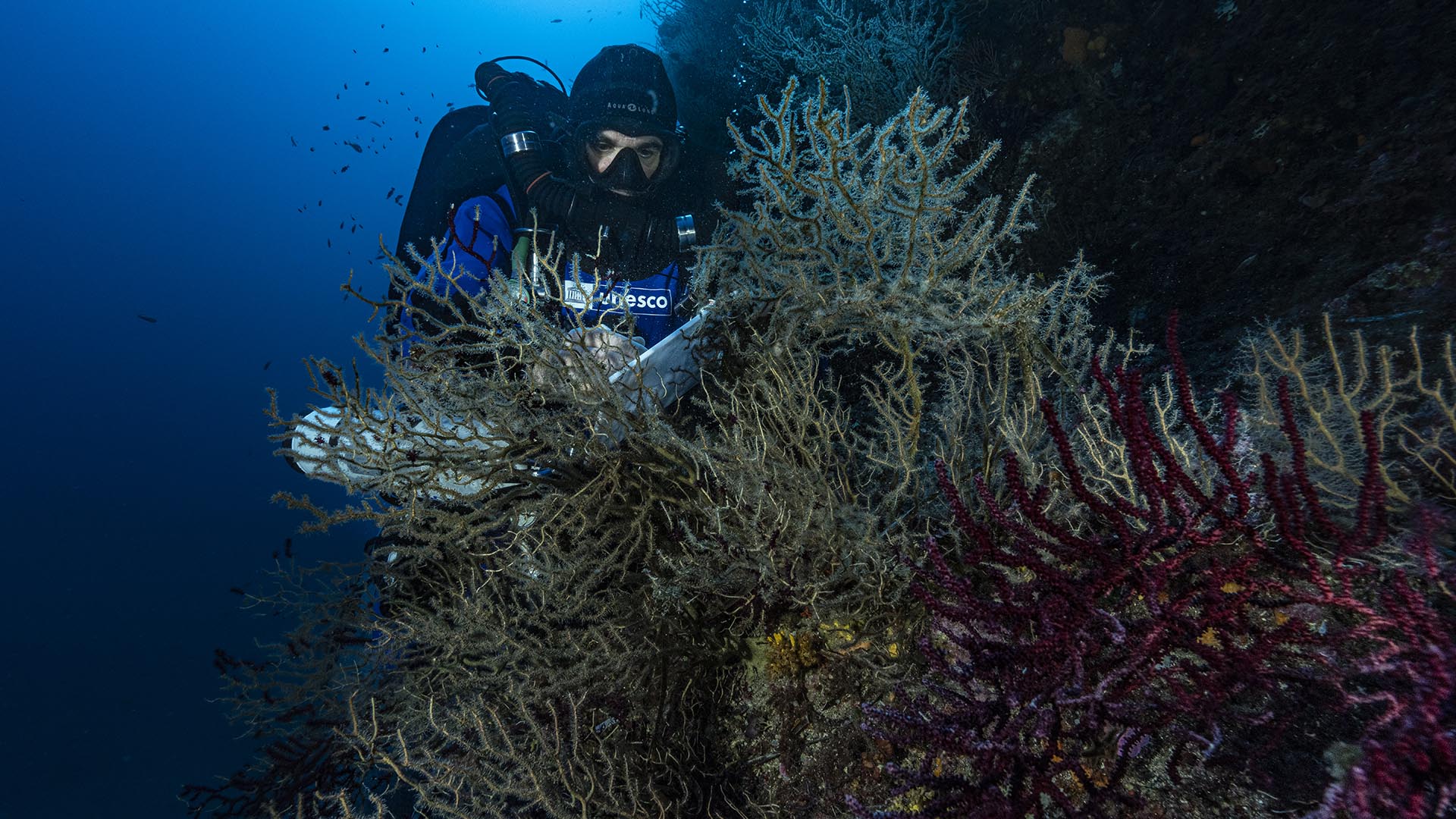

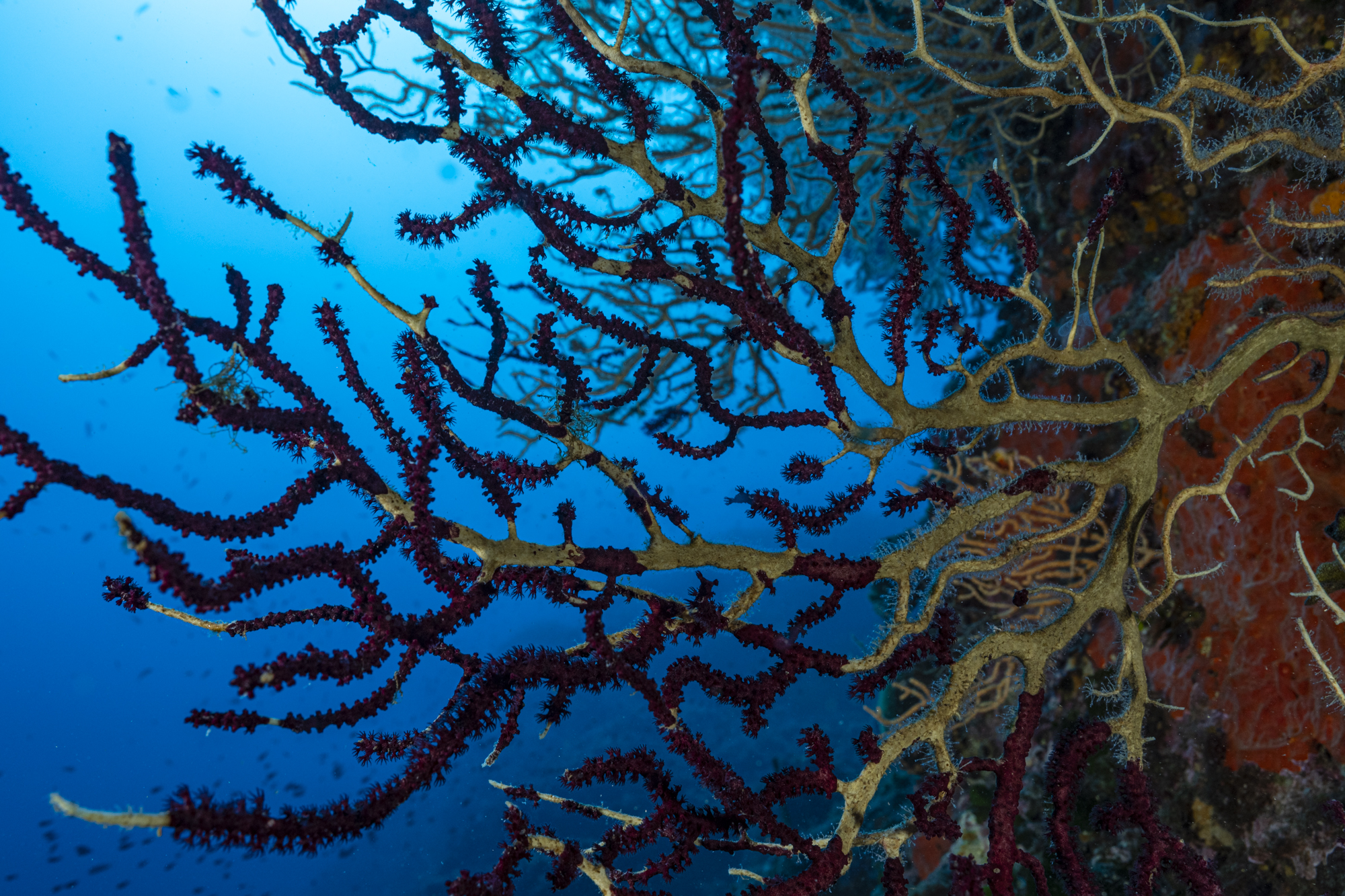


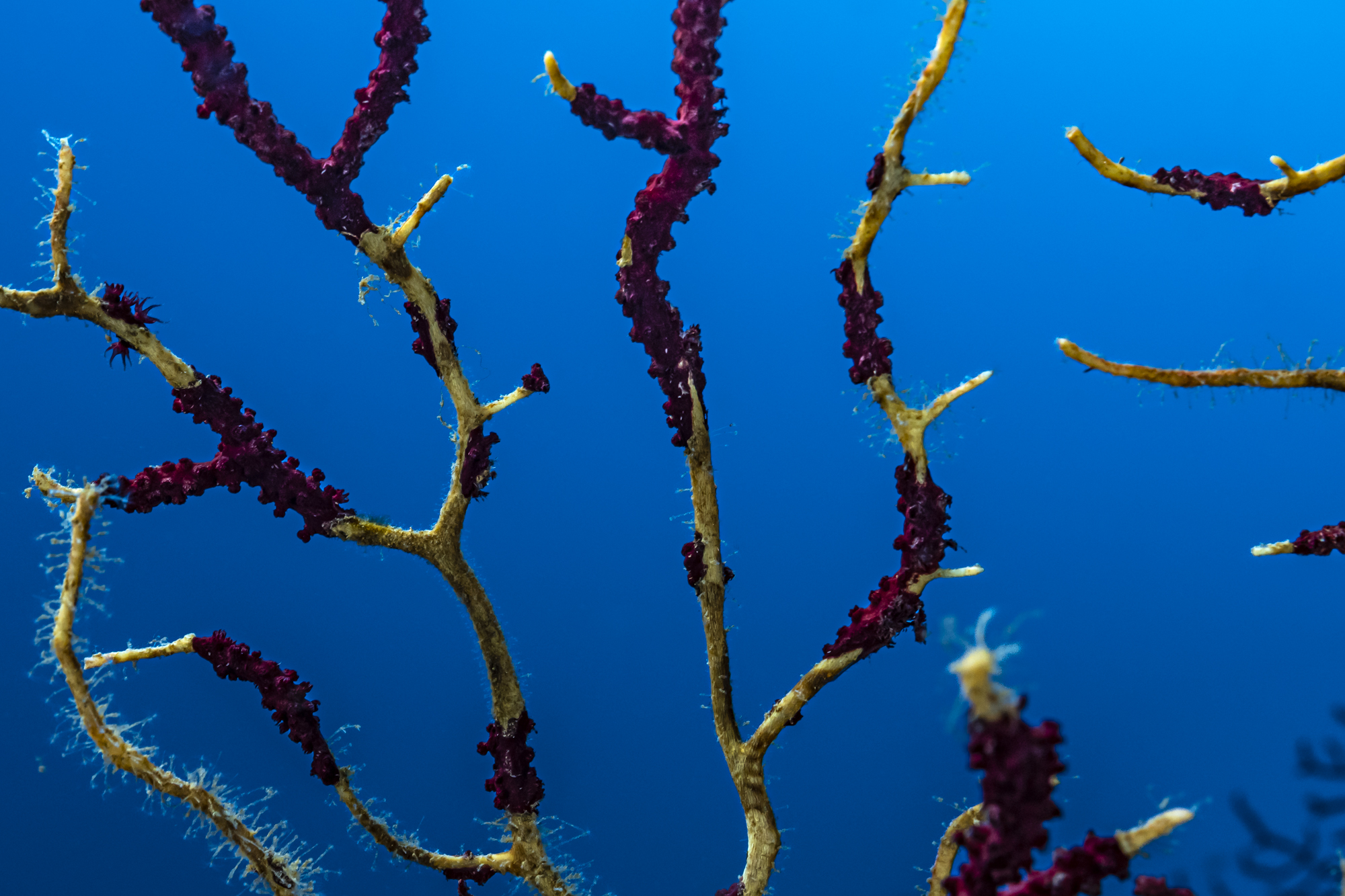


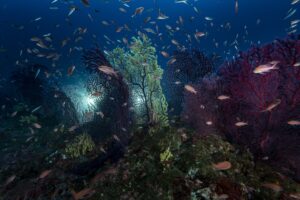
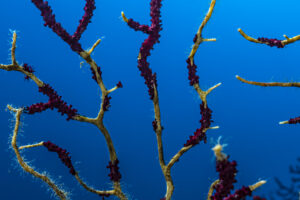
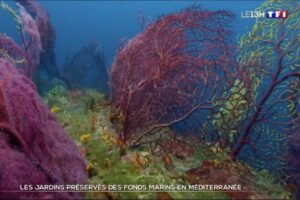
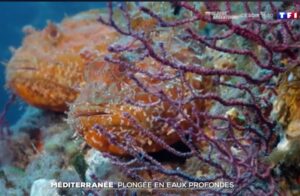
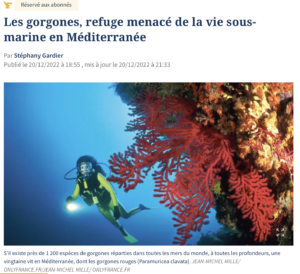
Red sea fans (Paramuricea clavata) are endemic and emblematic animals of the Mediterranean. They are close relatives of reef corals but, unlike them, they can live at great depths, indeed they can be found at depths of up to 100 meters. Like underwater trees, sea fans form veritable animal forests. Their three-dimensional structure gives these sessile organisms the role of a pantry, nursery, and protective habitat on which many species depend.
An Alarming Observation
During the summer of 2022, gorgonians in the western Mediterranean basin experienced a mass mortality event linked to abnormally high temperatures. At some sites, the findings are alarming: between 0 and 30 meters deep, almost all gorgonians died in just a few days. If climate projections are to be believed, these thermal disturbances are likely to become increasingly frequent. In the short term, Mediterranean gorgonian populations could be seriously threatened, and with them, the entire associated ecosystem.
“The mortality of sea fans is probably the latest warning sign of the ecological crisis we are experiencing.”
Lorenzo BRAMANTI, Research Fellow, CNRS – LECOB.
“The situation of gorgonians in the Mediterranean reflects what is happening across our entire planet. Like the Amazon rainforest, underwater animal forests are gradually disappearing, with equally dramatic consequences. For thousands of living creatures, these forests are both a protective habitat and a food source, and their disappearance inevitably leads to a loss of biodiversity."– Alexis ROSENFELD, Explorer and photographer for 1 OCEAN missions.
Faced with the ecological emergency, a scientific exploration program
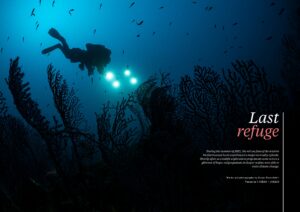
Faced with the ecological emergency, UNESCO and the 1 OCEAN Foundation have launched a scientific exploration program in partnership with the CNRS and the LECOB research unit of the Banyuls-sur-Mer Oceanographic Observatory: "Noah's Ark of the Deep: A Future for Biodiversity?" Indeed, beyond a certain depth, gorgonians appear to be preserved, as if they had been protected in a thermal capsule. For scientists, this observation is a real source of hope: less impacted by temperature anomalies, the depths could become true climatic refuges for animal forests.
Launched in October 2022, this two-year program involves four European countries (France, Italy, Monaco, and Spain) and is led by scientific director Lorenzo BRAMANTI, a specialist in animal forests. The program will focus in particular on shipwrecks in the Mediterranean, which provide a unique natural laboratory for studying animal forests. To assist the researchers, Lily, the underwater drone belonging to the 1 OCEAN Foundation, will be responsible for collecting data at depth and taking samples for genetic analysis. The aim will be to determine whether deep-sea habitats can support demographically self-sufficient animal forests and thus become the ultimate biological safe haven.


This mission was carried out with the support of our partners.
Would you like to join us?