
A mission to the depths of the Earth, in search of the origin of life.
Depuis 2021, l’activité du volcan Stromboli a redoublé d’intensité, générant des éboulements et d’épais nuages de fumée qui alertent les spécialistes. Premier témoin de l’activité volcanique intense dans les îles Éoliennes, le Stromboli est l’un des deux derniers volcans terrestres actifs de l’archipel sicilien. Toutefois, nombre de ses semblables se cachent sous la surface. D’après les estimations de la NASA, les fonds marins comptent plus d’un million de volcans, soit 80% du total de la planète.
DIVE INTO THE AEOLIAN ISLANDS, AT THE HEART OF ONE OF EUROPE'S MOST IMPORTANT VOLCANIC SYSTEMS
The Aeolian archipelago consists of seven main islands: Alicudi, Filicudi, Lipari, Panarea, Salina, Stromboli, and Vulcano. Located north of the Sicilian coast, it is part of a vast volcanic system that also includes the volcanoes of the southern Tyrrhenian basin, notably Vesuvius and Etna. Listed as a UNESCO World Heritage Site, the Aeolian Islands are home to one of the most significant concentrations of volcanoes on the Old Continent.
Although invisible from the surface, volcanoes are also very active at depth. In spring 2022, an 1 OCEAN exploration mission will be organized to explore the Panarea underwater caldera. It will accompany a scientific mission by the INGV (National Institute of Geophysics and Volcanology) led by volcanologist Francesco Italiano.
The first dive is breathtaking: just a few meters below the surface, constant gas eruptions coming directly from the volcano's magma chamber escape from the bowels of the Earth to form impressive curtains of bubbles. In the caldera, some sites release more than a million liters of gas per day.
Cette mission a été réalisée avec le partenariat de l’UNESCO, Sony, L’Istituto Nazionale di Geofisica e Vulcanologia, Caz’a Productions, l’institut océanologique Paul Ricard et Dream Yacht Charter.



Devenez partenaire de la Fondation 1OCEAN pour soutenir la cause de la découverte sous-marine !
The next stage of our exploration takes us much deeper, to a depth of over seventy meters. During their last mission, INGV divers made an extraordinary discovery: The Smoking Land. The seabed there is covered with hydrothermal vents, which sulfur has given a distinctive orange color. They continuously expel high-temperature acidic fluids.
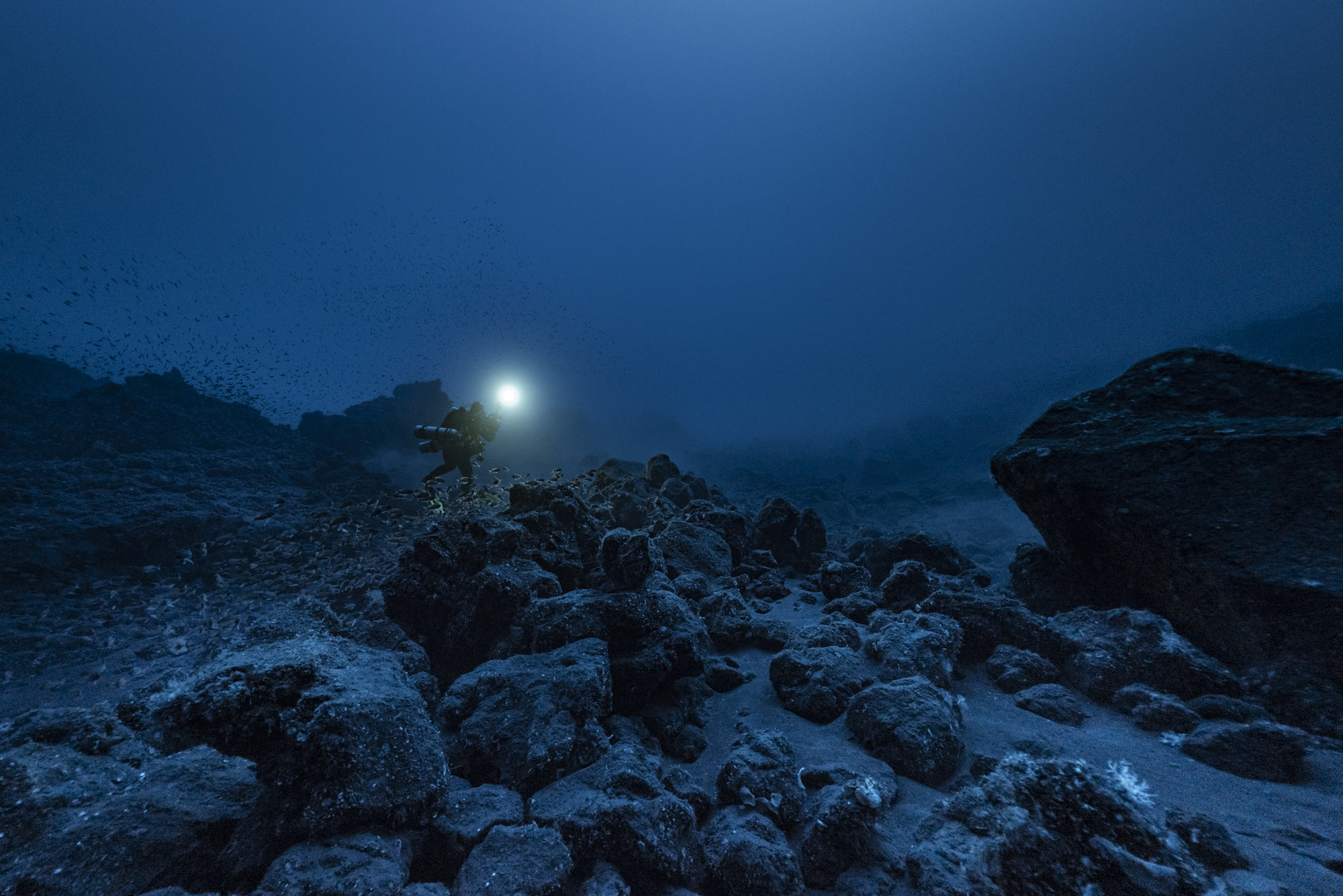
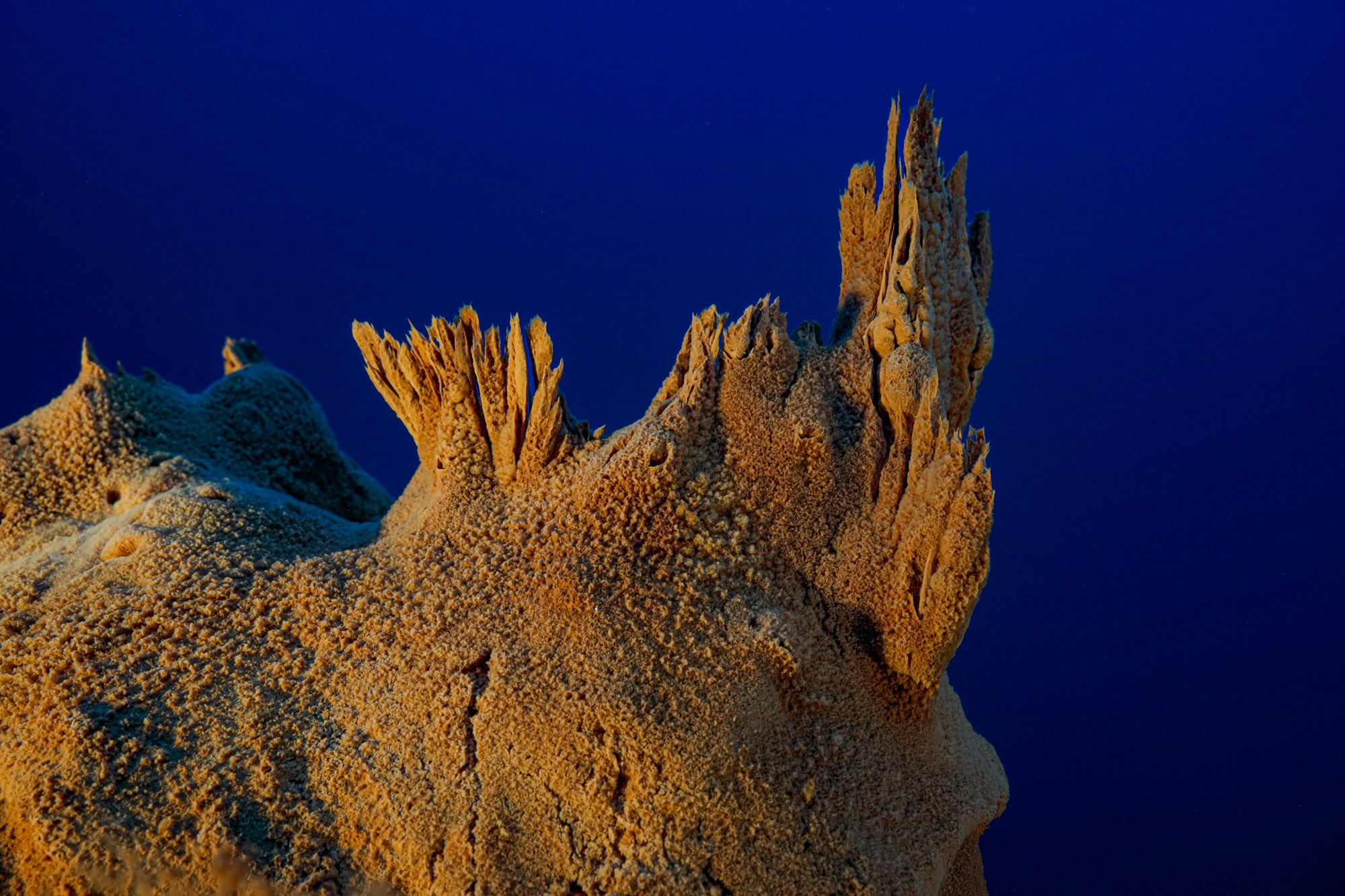
« Les volcans sous-marins de Panarea sont l’un des paysages les plus marquants qu’il m’ait été donné de voir. On est parfois à plus de soixante-dix mètres de profondeur, au beau milieu d’un champ de cheminées volcaniques qui crachent des gaz et fluides brûlants, toxiques… C’est une ambiance époustouflante, où l’on est à la fois enveloppés par le silence infini de l’océan et témoins de ce spectacle dantesque, un peu comme si l’on se trouvait aux portes des enfers. On comprend alors que la Terre est vivante. Depuis la surface, on ne se doute de rien.”
Alexis Rosenfeld
UNDERWATER VOLCANOES, THE CRADLE OF LIFE
Paradoxalement, les conditions extrêmes dans ces fonds marins pourraient aussi être la clé de l’une des plus grandes questions de l’humanité : l’origine de la vie. En effet, selon les scientifiques, c’est autour de ces éruptions volcaniques que seraient nés les premiers organismes ; c’est là que le minéral se transforme en vivant. Le volcanologue Francesco Italiano explique : “C’est sur ces cheminées hydrothermales que les composants chimiques sont transformés en matière vivante. C’est ici que la vie commence.”
The seabed of the Panarea caldera is dotted with white patches that are usually found at the base of gas columns. These patches are actually clusters of bacteria that feed mainly on carbon. They are the first link in the food chain, the basis of terrestrial ecosystems.
DMAR, UN LABORATOIRE SCIENTIFIQUE COMMUN
Francesco Italiano is certain: “Panarea is a unique place. It is a natural laboratory where many different scientific disciplines can come together and work together.”
Avec l’INFN (Institut national de physique nucléaire) et le CNR (Centre National de Recherche), le volcanologue et d’autres chercheurs de l’INGV sont en train de créer un projet d’ampleur autour de la Sicile : le projet IDMAR. Au cœur de ce projet, une plateforme scientifique d’accueil et de partage pluridisciplinaire dont l’objectif est de recueillir et de centraliser une multitude de données en continu. IDMAR, c’est la science qui travaille ensemble pour une meilleure connaissance des phénomènes sous-marins en Sicile.
PANAREA – STROMBOLI, AN UNSTABLE AXIS
Thanks to this program, Francesco Italiano and his team can listen to the volcanoes around the clock. In recent years, they have observed worrying changes in the behavior of the region's volcanoes. Stromboli, in particular, has them on alert: for some time now, analyses have shown abnormal instability, leading scientists to fear a major event:
“Le Stromboli est un volcan actif. Il génère en permanence des explosions de faible intensité mais parfois son activité change de nature. Il produit alors des coulées de laves mais aussi d’énormes explosions qui peuvent être très dangereuses pour les Hommes.”
Francesco Italiano
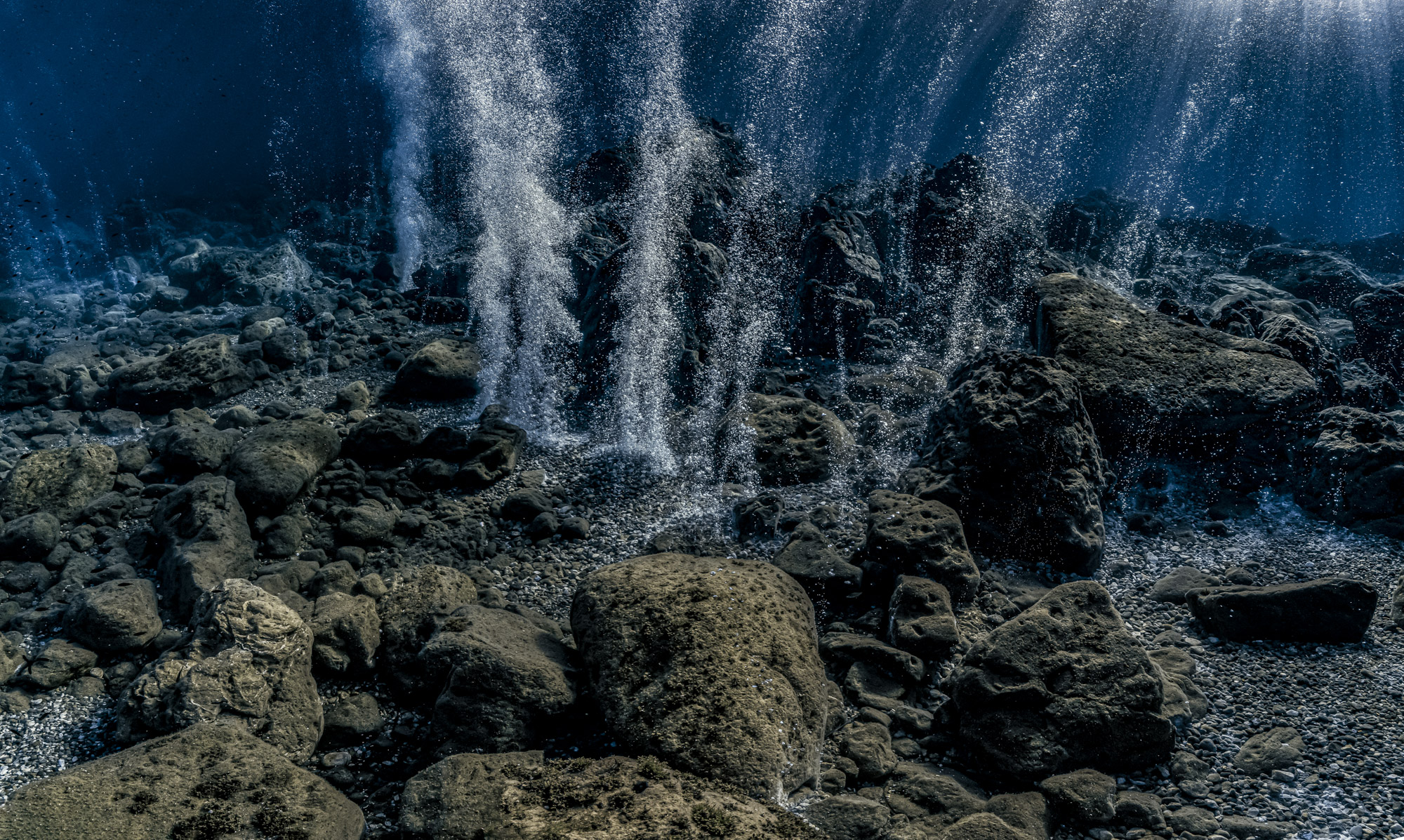
A few years ago, a phreatic explosion in the Panarea caldera opened a fault line all the way to Stromboli and caused a collapse on the volcano. This gas eruption released more than a billion liters of carbon dioxide every day. Recently, scientists made an important discovery: Stromboli and the Panarea caldera are actually connected to a single magma chamber.
TSUNAMIS: A MAJOR RISK AND COORDINATED MANAGEMENT BY THE IOC-UNESCO
One of the main concerns for scientists is the possibility that an eruption could generate a large-scale tsunami, which would pose a major risk to the region's population.
“One of the risks is the possibility of a tsunami. The main problem in dealing with this risk is the short distance between the islands. A tsunami travels at very high speed, at least 186 mph. A tsunami can therefore reach one of the islands in just a few minutes.”
Tsunamis pose a major risk to coastlines and can travel long distances. In 1960, an earthquake measuring 9.5 on the Richter scale—the highest ever recorded—occurred near Valdivia, Chile. The resulting tsunami crossed the entire Pacific Ocean, causing damage as far away as the coast of Japan, approximately 10,500 miles from the epicenter.
Face à cette éventualité, l’UNESCO travaille à un programme de formation des populations côtières. L’organisation dispose déjà d’une longue expérience dans ce domaine, par le biais de sa Commission Océanographique Intergouvernementale (COI) qui coordonne le Centre d’alerte aux tsunamis du Pacifique (PTWS) depuis les années 60. Depuis 2005, trois nouveaux systèmes sont venus s’ajouter au programme : le CTWS dans les Caraïbes, le IOTWS pour l’Océan Indien et le NEAMTWS pour le Nord-Est Atlantique et la Méditerranée.
In January 2022, this alert system coordinated by UNESCO enabled a very rapid response to a tsunami generated by an underwater volcanic eruption in the Tonga Islands. Although there was significant material damage, hundreds of lives were saved thanks to excellent multilateral cooperation.