







In Progress
Great Migration of Life
The Sardine Run, the migration of sardines in southern Africa, is the largest and most famous underwater wildlife event in the world. Its spectacular nature has inspired...

In Progress
Noah's Ark
A scientific program by the 1 OCEAN Foundation to understand and preserve animal forests. August 2022. After a particularly amateurish summer...

In Progress
Lagoon of Hope
Coral reefs could disappear by 2050. Inevitably, the temperature of our oceans is rising, gradually leading to the decline of this ecosystem...

In Progress
Cap Roux
The Cap Roux fishing reserve is a 450-hectare marine protected area at the foot of the Estérel Massif in the Var department. Inside this reserve, created in...
Transmission to the General Public


Social Networks
Support 1 OCEAN and take action to preserve the oceans.
Donations, sponsorships, bequests:
choose how you want to get involved!
Boost your CSR image, raise awareness among your teams, and benefit from international visibility.
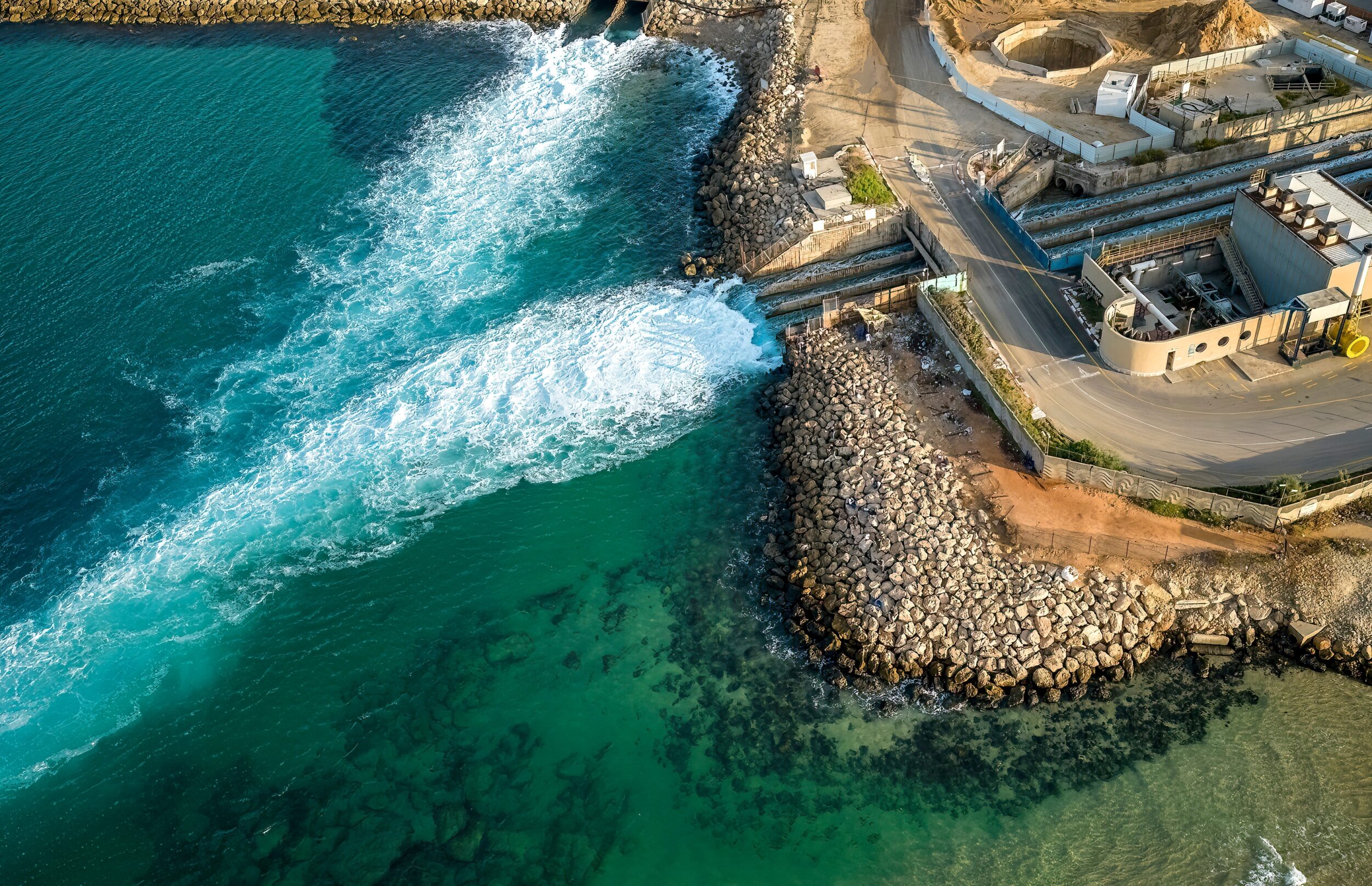
Many populations around the world are facing freshwater shortages. To address this issue, new desalination plants are being built every year, but these plants raise questions. As major consumers of fossil fuels, are they compatible with sustainable development?
Every year, global demand for fresh water increases by 1%. Faced with this constant rise, we are now turning to the oceans... to turn salt water into fresh water!
There are two main desalination techniques: the thermal process, which makes salt water drinkable through distillation, and osmosis (now the most widely used), which recovers fresh water from the oceans by filtering it through a membrane. Both solutions are very energy-intensive, while at the same time, 99% of the electricity used worldwide in more than 20,000 existing plants comes from fossil fuels (2017 figures).
Accordingto theIFRI report, this results in at least 120 million tons of carbon dioxide being emitted each year. If nothing is done to make the process more sustainable, this figure is expected to reach 280 million tons by 2050.
In addition, desalination plants discharge more than 140 million cubic meters of brine every day, a concentrate of seawater that is warmer, saltier, and contains numerous chemicals. Saltier and therefore less oxygenated, ocean water captures less CO2. This is a problem that is currently unsolvable but raises questions.
Sauver la mer,
c’est aussi sauver
la Terre.
L’Océan est essentiel à la vie sur Terre, protégeons-le.
Avec 1€ pour l’Océan, un geste peut faire la différence.
Faites un don des aujourd’hui !
